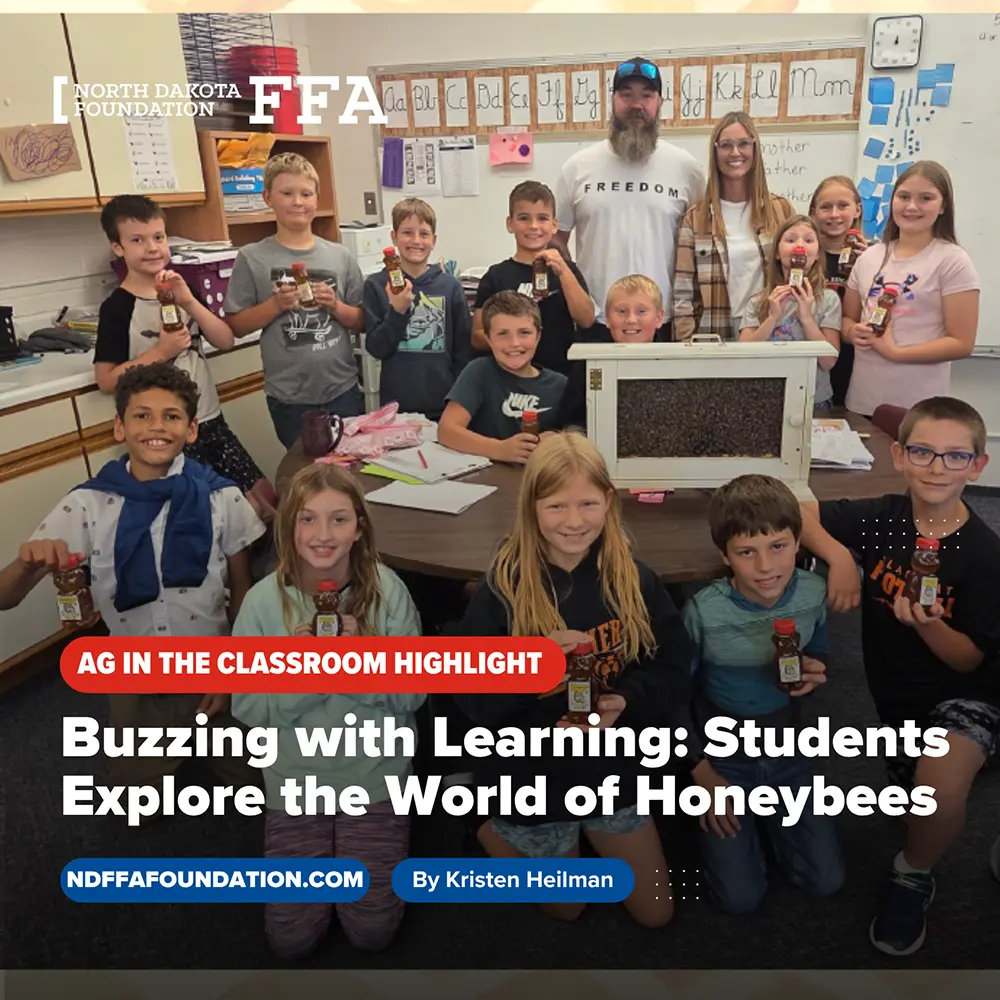
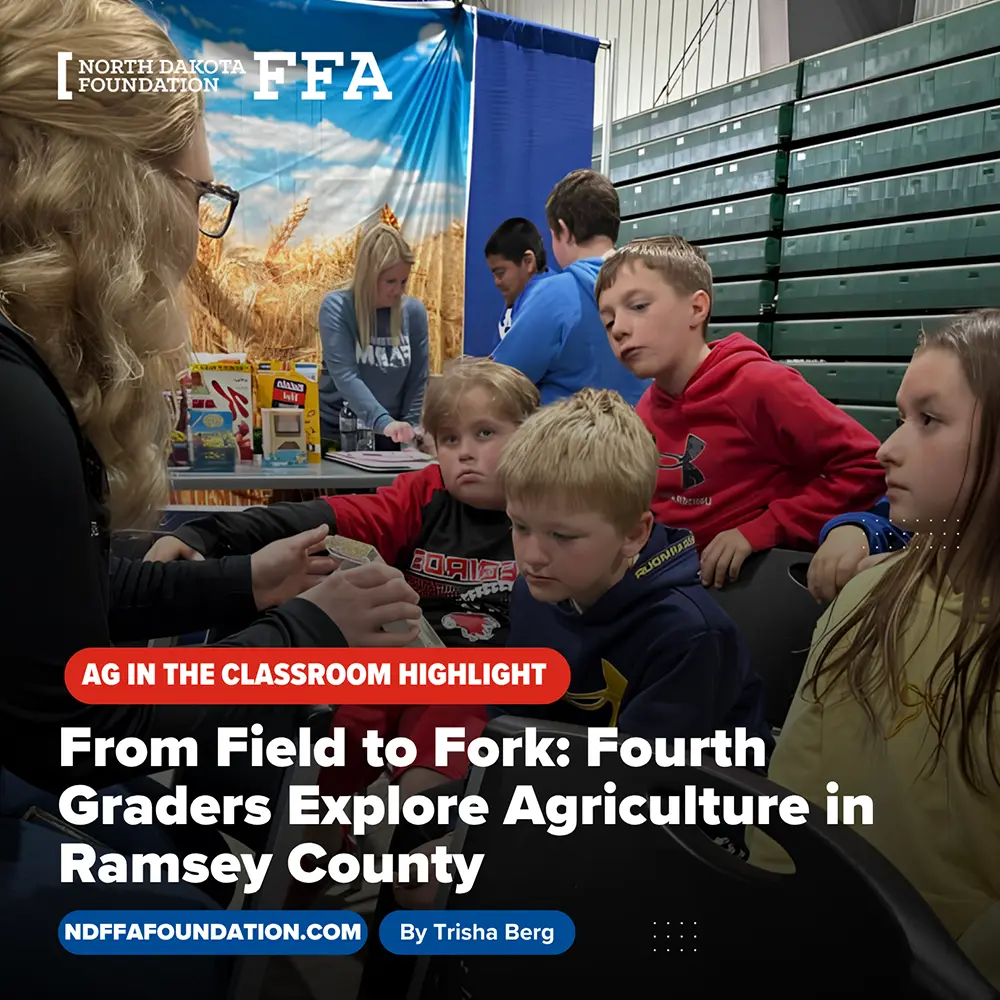
The ND FFA Foundation is committed to increasing agricultural literacy through meaningful, hands-on learning opportunities. Through a partnership with the North Dakota Department of Agriculture, the Ag in the Classroom Mini Grant Program provides funding for educators who bring agriculture to life in their classrooms. This year, Kristen Heilman’s fourth-grade class at Rugby Public Schools spent the school year discovering the important role honeybees play in agriculture, food production, and our everyday lives.
Program: Rugby Public Schools Ag in the Classroom Teacher: Kristen Heilman, 4th Grade Teacher Impact: 16 fourth-grade students Purpose: To help students understand the importance of honeybees, honey production, pollination, and the many ways bees support agriculture and our food system.
Throughout the school year, students explored the world of honeybees through books, research, hands-on projects, guest speakers, and creative activities. Using materials purchased through the Ag in the Classroom Mini Grant, students learned about bee biology, honey production, pollination, and the many products bees provide beyond honey, including beeswax and bee pollen.
One of the highlights of the project came early in the school year when local beekeepers Bobbi and Jeremy from Bulldog Honey visited the classroom. Students had the chance to observe live honeybees in an observation hive, learn how bees communicate through the famous “waggle dance,” explore careers in beekeeping, and discover the important role pollinators play in North Dakota agriculture. For many students, seeing a hive up close was an experience they won’t soon forget.
Learning didn’t stop with classroom discussions. Students sampled different varieties of honey, tasted bee pollen, and even made their own beeswax candles, giving them a firsthand look at products created through beekeeping. They also worked in small groups to research topics related to honeybees, North Dakota’s honey industry, and pollination before presenting what they learned to their classmates. Along the way, they practiced using reliable sources, strengthened their presentation skills, and connected agriculture to science, economics, and language arts.
The project also encouraged students to think beyond the classroom. As they learned about declining bee populations and the importance of pollinators, students discussed ways they could make a difference at home. Families received educational information along with wildflower and pollinator seed packets, creating opportunities to plant gardens together while supporting honeybee conservation. Several students proudly shared that they had planted their seeds with their families, extending the learning well beyond the school day.
The impact of the project was evident throughout the year. Every student showed growth between the pre- and post-assessments, and one student was so inspired by the classroom experience that they decided they want to become a beekeeper someday. Those moments, along with the excitement students showed while learning, demonstrated the lasting value of hands-on agricultural education.
Through the Ag in the Classroom Mini Grant Program, the ND FFA Foundation and the North Dakota Department of Agriculture continue to support projects that help students build meaningful connections to agriculture. By giving students opportunities to explore, ask questions, and experience agriculture firsthand, projects like this inspire curiosity while helping the next generation better understand the people and industries that help feed the world.