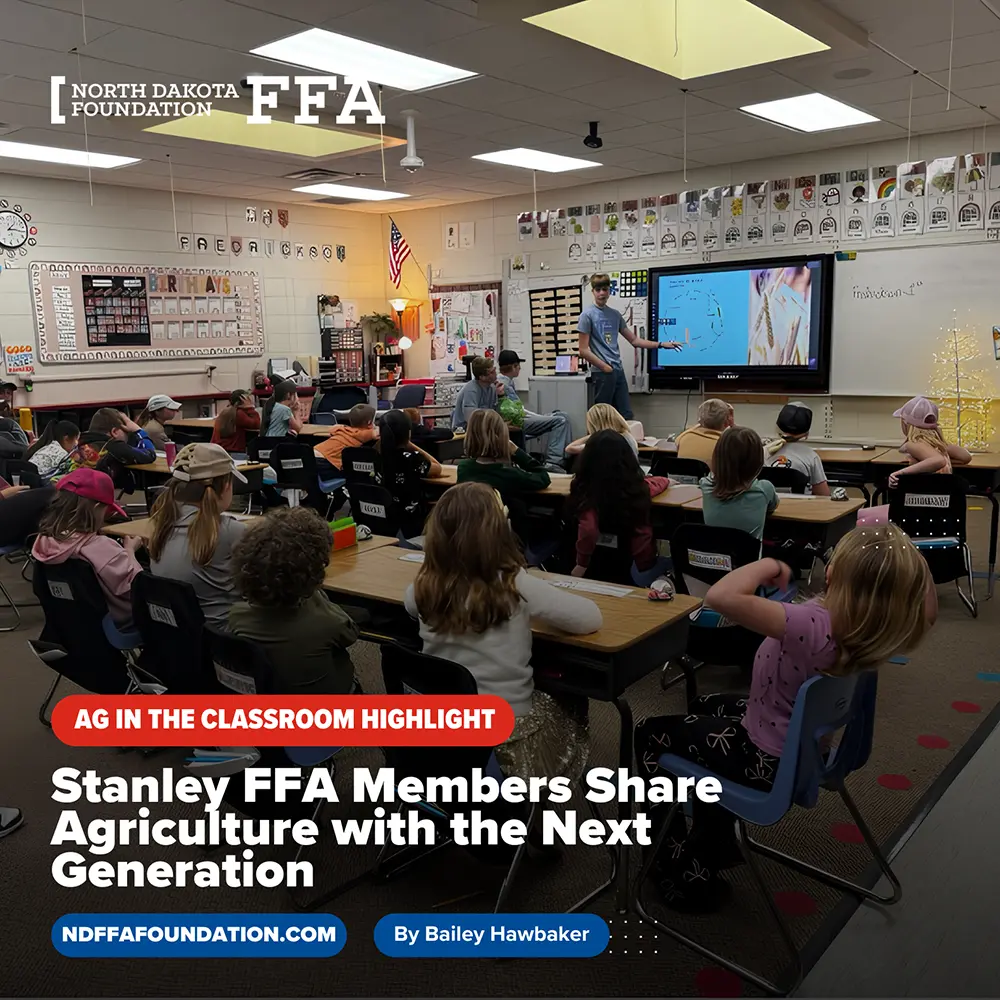
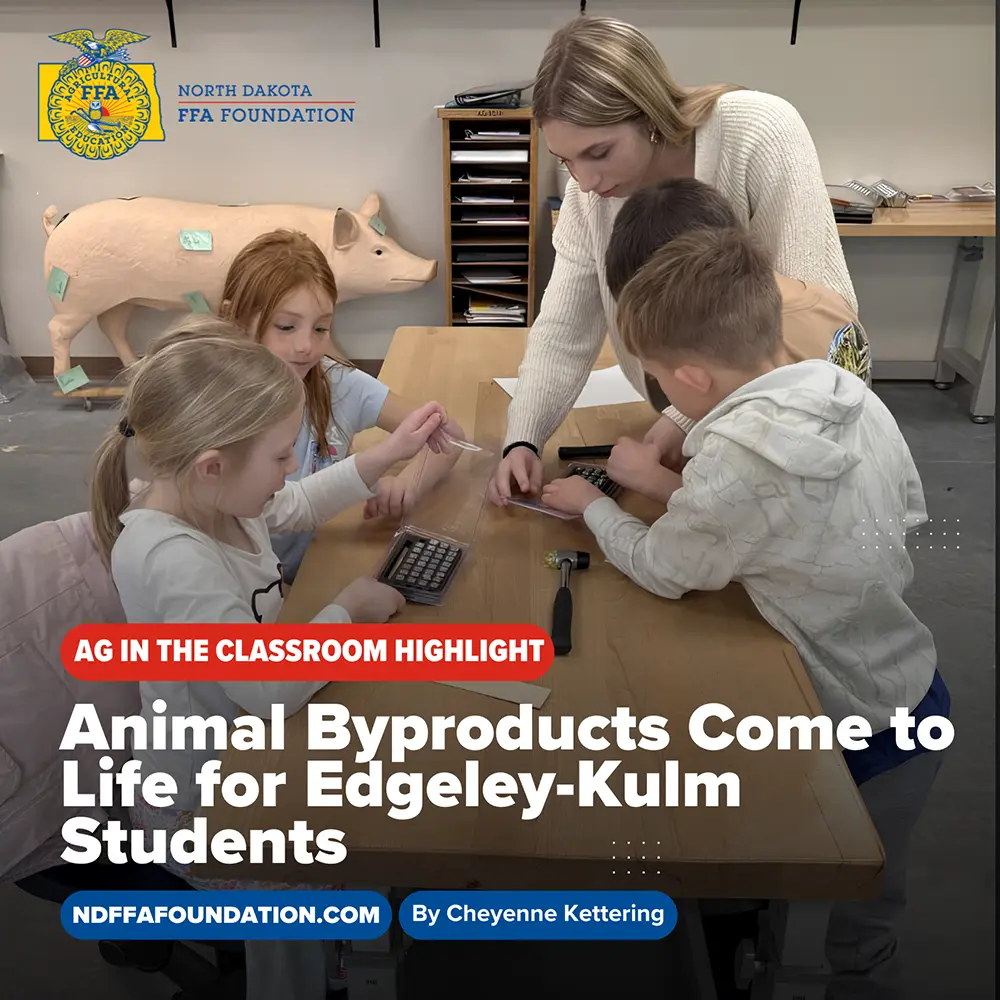
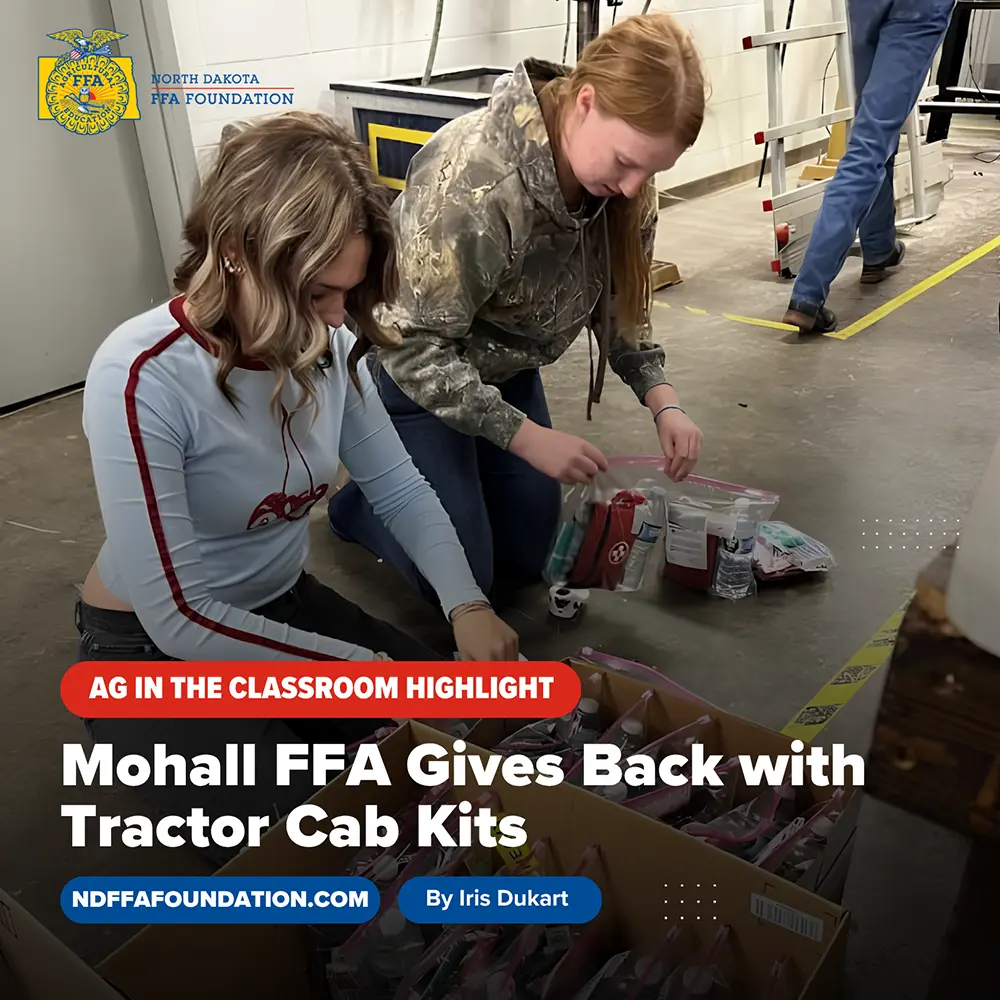
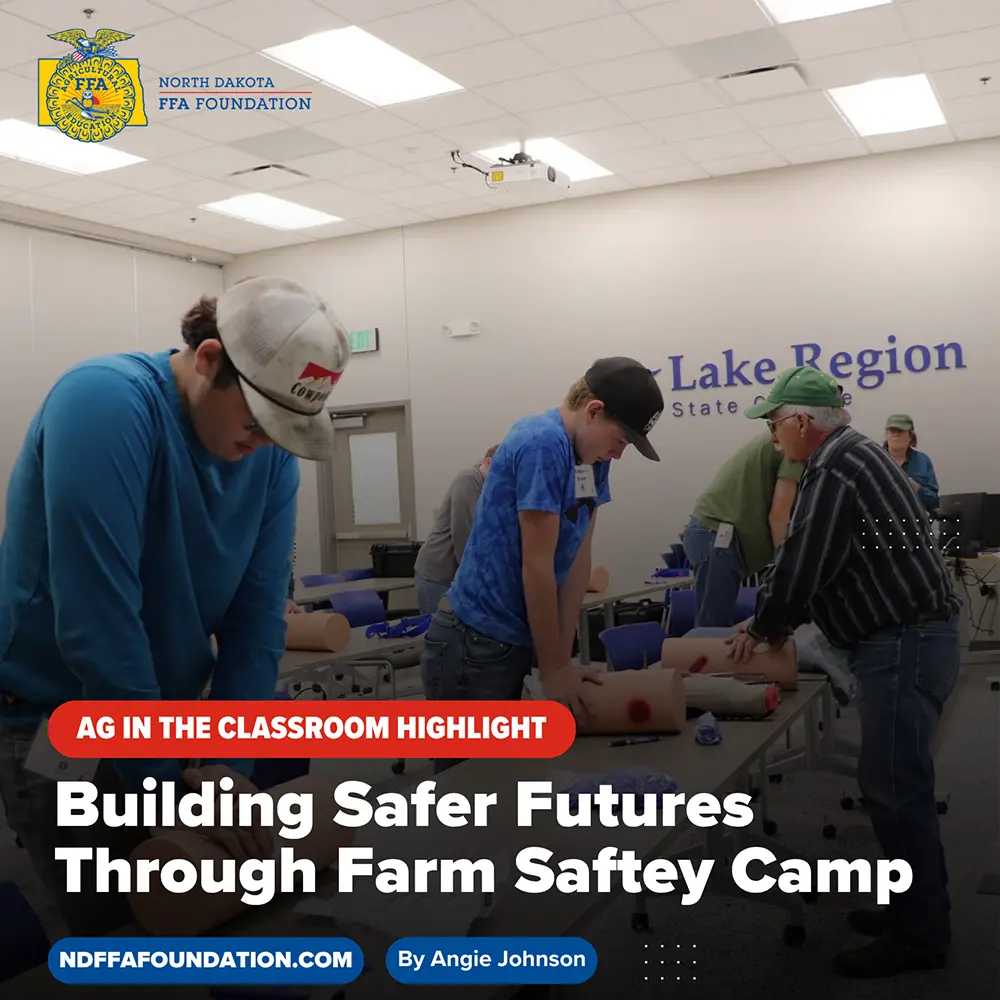
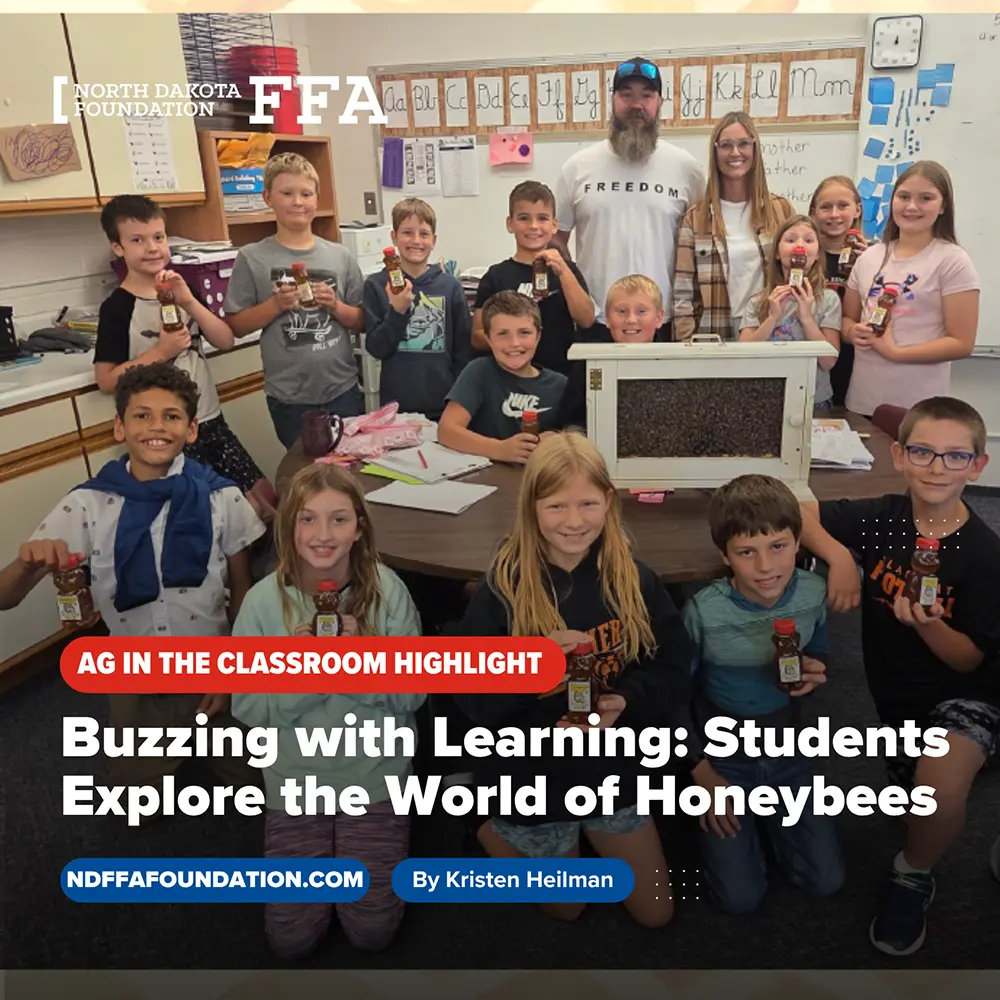
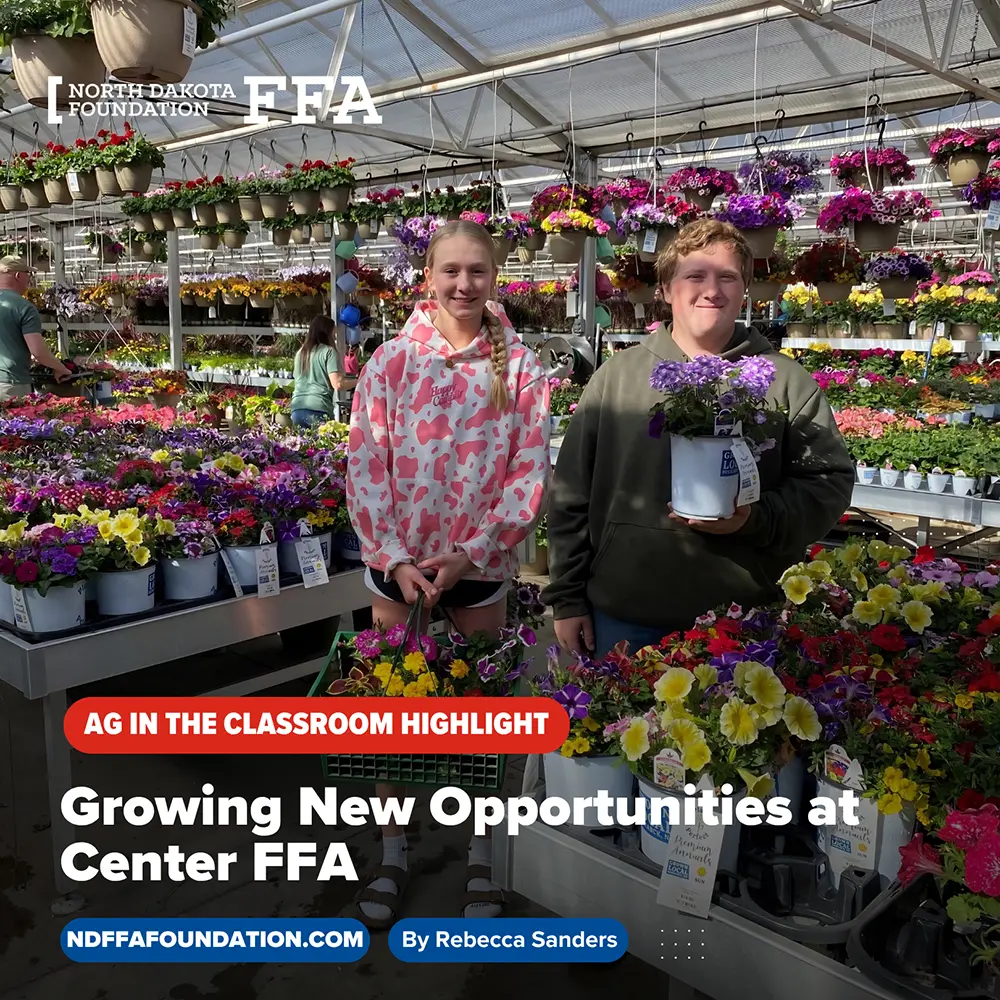
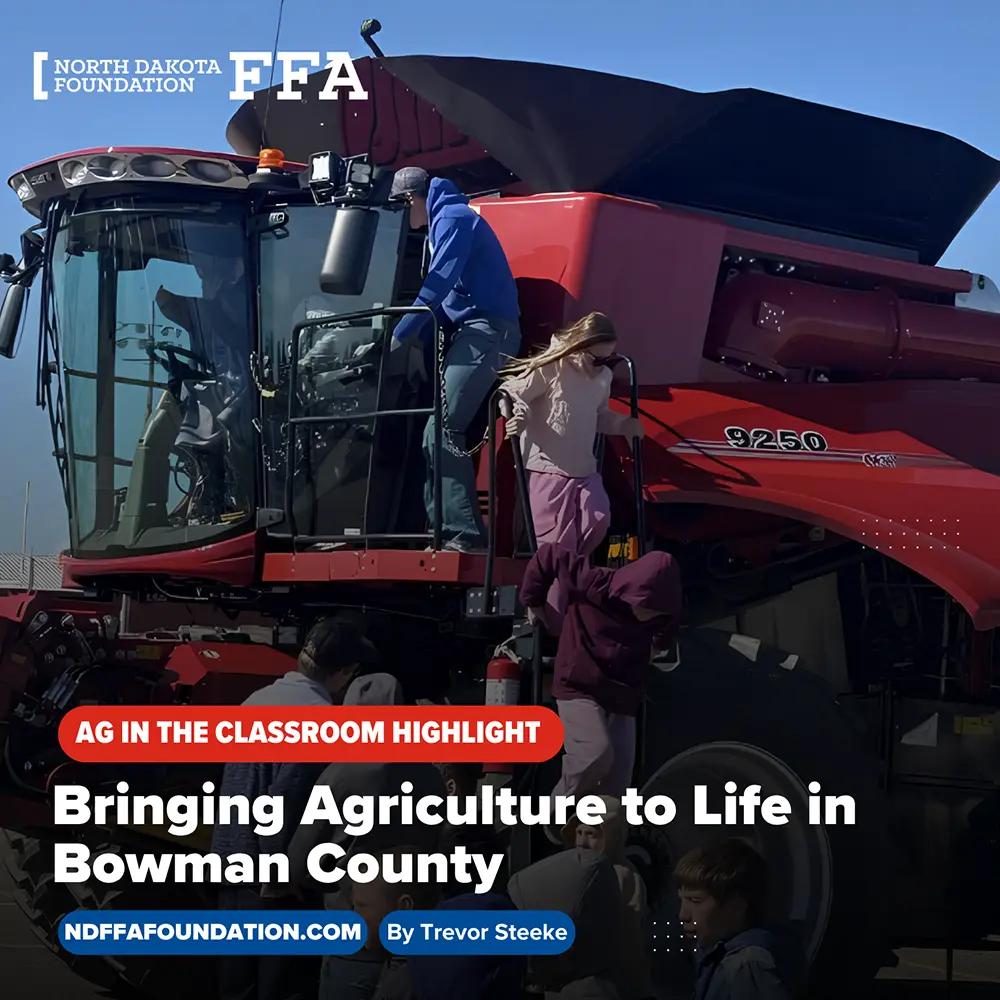
The ND FFA Foundation is committed to increasing agricultural literacy through meaningful, hands-on learning opportunities. Through a partnership with the North Dakota Department of Agriculture, the Ag in the Classroom Mini Grant Program provides funding for projects that bring agriculture to life for students across North Dakota.
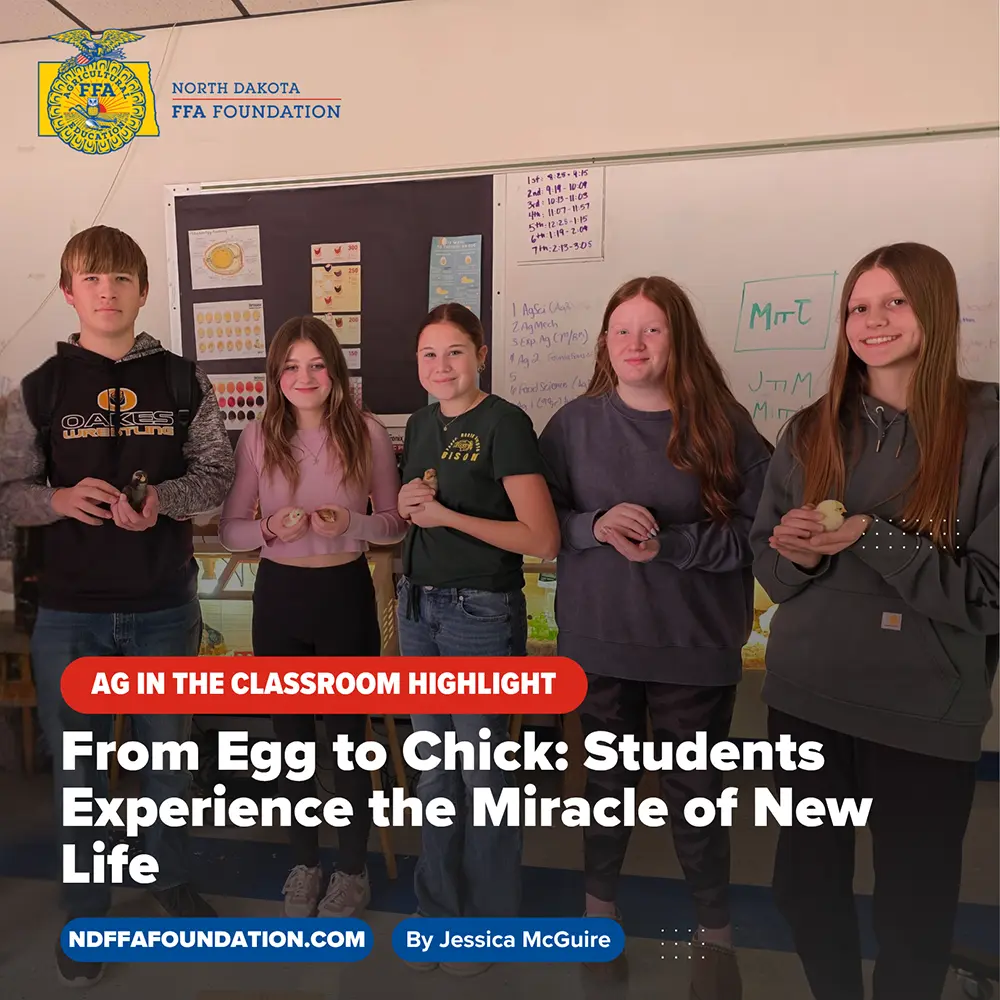
At the Oakes Southeast Region Career and Technology Center, students experienced the life cycle of poultry firsthand through an incubation and hatching project that combined science, agriculture, and animal care.
Program: Poultry Incubation and Hatching Project
Teacher: Jessica McGuire, Oakes Southeast Region Career and Technology Center
Impact: Approximately 60 students
Purpose: To help students explore embryology, animal care, and the life cycle of poultry through hands-on learning.
Objectives:
Learn about the life cycle and development of a chick embryo.
Understand how temperature, humidity, and egg rotation influence successful hatches.
Build responsibility through daily care, observation, and record keeping.
Develop problem solving skills by monitoring and analyzing the hatching process.
Students played an active role in every stage of the project, from preparing the incubator to caring for newly hatched chicks. Throughout the incubation process, they monitored temperature and humidity, turned eggs, and used candling techniques to observe embryo development. Each day brought new discoveries as students watched the changes taking place inside the eggs.
Excitement grew as hatch day approached. Out of 30 eggs, 24 chicks successfully hatched, and to everyone’s surprise, a few ducklings joined them as well. Watching the animals emerge gave students a firsthand look at the remarkable process of new life while creating memories that simply can’t be replicated through a textbook.
Students also learned to think like scientists. Rather than focusing only on the successful hatch, they discussed why some eggs didn’t develop and explored the environmental factors that influence embryo growth. These conversations strengthened their observation and critical thinking skills while building a deeper understanding of poultry production and animal care.
The experience extended beyond the agriculture classroom. Elementary students will also have the chance to visit the chicks throughout the school year, giving younger learners an up close look at agriculture and sparking curiosity about where animals, and the food they provide, begin.
Following the success of this year’s project, plans are already underway to continue the incubation experience each year while expanding opportunities for elementary students and sharing the project with the community.
Through the Ag in the Classroom Mini Grant Program, the ND FFA Foundation and the North Dakota Department of Agriculture continue to support projects that help students connect with agriculture through real world experiences. By observing, caring for, and learning from living animals, students gain a deeper understanding of agriculture while discovering the science behind it.