The ND FFA Foundation is committed to increasing agricultural literacy through meaningful, hands-on learning opportunities. Through a partnership with the North Dakota Department of Agriculture, the Ag in the Classroom Mini Grant Program provides funding for educators who create engaging experiences that help students explore the many ways agriculture impacts their everyday lives. At Edgeley-Kulm, high school students took the lead in teaching younger learners about an often-overlooked part of agriculture—animal byproducts.
Program: Edgeley-Kulm FFA Ag in the Classroom Teacher: Cheyenne Ketterling, Edgeley-Kulm FFA Advisor Impact: Approximately 65 students Purpose: To introduce elementary students to animal byproducts while giving them the opportunity to create a leather craft to take home.
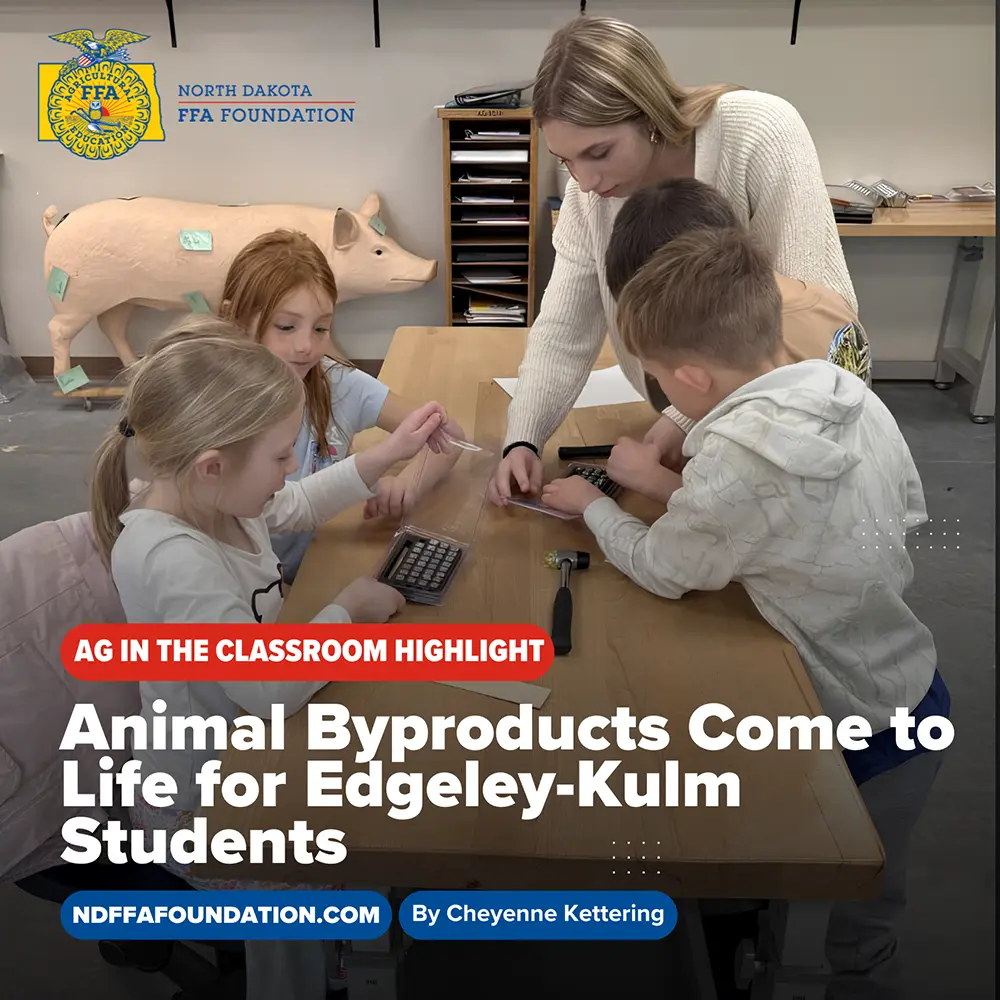
Before stepping into the role of teachers, four students in the Community Development class spent time learning about the many products that come from livestock beyond meat and milk. They researched byproducts from different animal species, wrote presentations, and practiced making leather bookmarks so they would be ready to guide younger students through the activity.
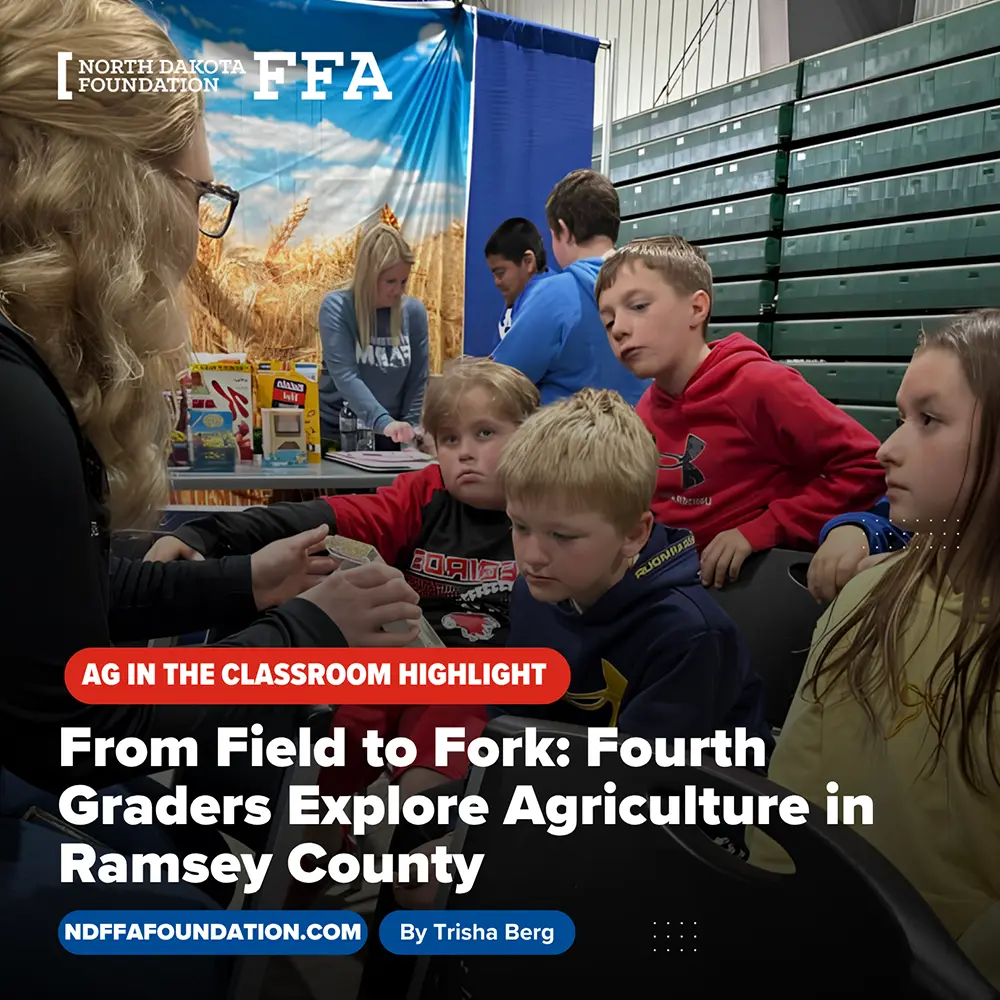
Once everything was prepared, first through third grade students visited the agriculture classroom for a lesson on animal byproducts. Working in small groups, the elementary students learned how materials like leather are produced and discovered the many everyday products that begin with agriculture. After the lesson, each student designed and finished a leather bookmark to take home as a reminder of what they had learned.
The project gave younger students a new perspective on agriculture while allowing high school students to build confidence as teachers and mentors. By leading presentations, answering questions, and helping with the leathercraft activity, the Community Development students strengthened their communication and leadership skills while sharing their passion for agriculture.
Although the project reached approximately 65 students, its impact went beyond the classroom. By introducing students to the wide variety of products that come from livestock, the lesson encouraged them to think differently about agriculture and the many ways it contributes to everyday life. The team also identified opportunities to build on the project in the future by exploring ways to measure student learning before and after the lesson.
Through the Ag in the Classroom Mini Grant Program, the ND FFA Foundation and the North Dakota Department of Agriculture continue to support projects that help students make meaningful connections to agriculture. Experiences like this encourage curiosity, build agricultural literacy, and show students that agriculture reaches far beyond the farm.