Through the ND FFA Foundation’s Ag in the Classroom grant program, offered in partnership with the North Dakota Department of Agriculture, educators across the state are helping students discover agriculture in unexpected places. At one school, students took a hands-on journey through the “Lifecycle of Leather”—learning about animal byproducts and gaining appreciation for craftsmanship.
Program:New Salem Ag Education Teacher: Brooke Kunz & Shawn Feiring Impact: 35 students
Purpose: Introduce students to the leather industry, from animal byproduct to finished material, and provide learning in leatherworking and design.
Objectives:
Understand how leather is produced, from slaughter plant to tanning and finishing.
Learn the uses of different types of animal leathers.
Create a personalized keychain using leather tooling and stamping techniques.
Spark student interest in lesser-known aspects of agriculture.
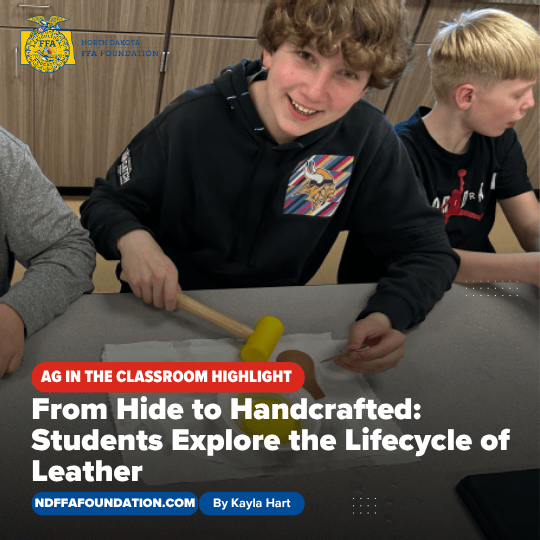
Students show off their hand-tooled leather keychains after learning how leather is processed.
Led by educator Brooke Kunz, this creative project gave 25 sixth-grade and 10 seventh-grade students a close-up look at an industry many had never considered before. Students first learned about the steps involved in leather production—from the harvesting of hides to the chemical and physical processes used in tanning, finishing, and refining leather products.
The second half of the project brought learning to life. Students used tools and materials purchased through the grant to design and create their own leather keychains. For many, it was their first time handling leather and using tools for stamping and decorating. The pride in their finished products was clear as they left with a tangible souvenir of their efforts and learning.
Even after the project ended, students continued stopping by the ag classroom to see what else was happening, a sign that this engaging project planted a deeper interest in agriculture. While the initial group included 35 students, Brooke plans to continue using the tools and materials to expand the project’s reach in future classes.
By combining education, creativity, and first experience, this leatherworking project gave students a new perspective on agriculture—and a keychain to remember it by.