The ND FFA Foundation supports creative, interactive projects that help students of all ages connect with agriculture—and few experiences are as engaging as watching life begin right in the classroom. Through an Ag in the Classroom grant, one program brought the wonder of embryology, animal health, and the poultry industry to life for more than 200 students.
Program: Bottineau Ag Education Teacher: Jana Costa Impact: 200 students Purpose: Introduce students to the poultry industry, the life cycle of chickens, and biosecurity practices through direct interaction with live animals.
Objectives:
Teach students about embryology and the development of a chick from egg to hatch.
Educate on animal health, biosecurity, and safe handling practices.
Provide younger students with access to live animals and ag-related reading materials.
Foster peer-to-peer learning by having high school students lead instruction in elementary classrooms.
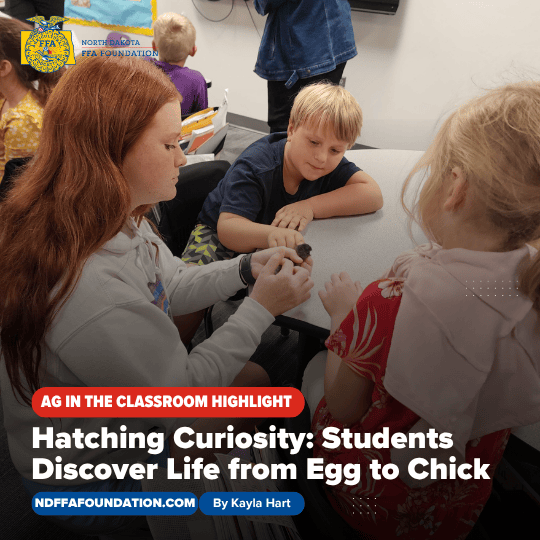
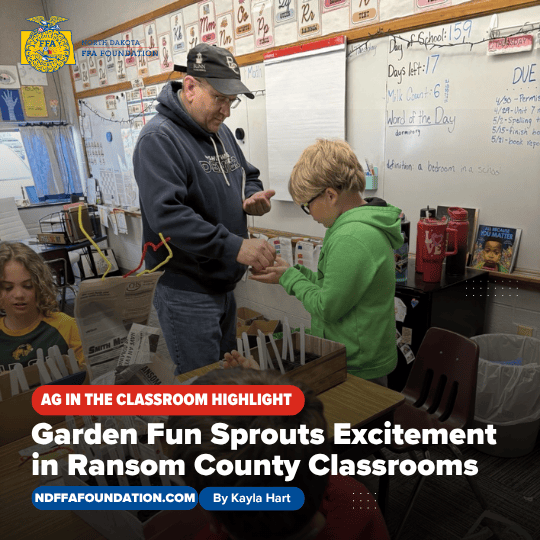
The project began in the ag classroom, where students learned about the poultry industry and carefully monitored eggs through incubation and hatching. Once the chicks were born, the experience expanded—older students from a small animal care class visited local elementary classrooms to share the learning.
Equipped with age-appropriate books and a deep understanding of the chick life cycle, the older students led lessons on how an egg becomes a chick. They also emphasized safe handling practices, the importance of biosecurity, and proper handwashing. Afterward, the younger students were invited to gently hold and observe the chicks, sparking excitement and curiosity.
Teacher Feedback:
“Many of our elementary teachers used the visit as a springboard for their own lessons. The interaction between the older and younger students was one of the highlights of the year.”
Results & Takeaways:
Students gained a better understanding of the life cycle, animal health, and basic biosecurity.
Younger students had the opportunity to see and touch live farm animals—an experience many had never had before.
The project supported cross-grade collaboration and enhanced agricultural literacy throughout the school.
By bringing agriculture into the classroom in such a personal and tangible way, this project fostered curiosity, compassion, and a greater understanding of where food and animals come from—one fuzzy chick at a time.